

An Aesthetic Death
What makes a death memorable?

Every year, roughly a handful of people die climbing up Mount Everest. While lying in bed and gazing at your screen, you might scoff, "Oh, how foolish those woefully unprepared idiots were, putting themselves in danger over a meagre rush of adrenaline". Those few who pass away, for whatever circumstances may be, died trying to cross almost 69km of rocky terrain through hail and snow to reach the pinnacle of the earth. What drives someone to take such a great risk? This essay will be an exploration of the topic of an aesthetic death and a life well-lived, something that was briefly touched upon in my previous essay on bullfighting here.
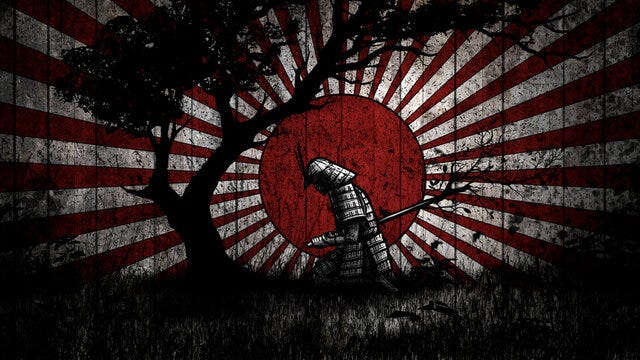
The Low Aspirations of the Modern Day Hobbits.
There is a yearning in the mainstream right for the return of life in a 1950s, affluent, American neighborhood. These people long for a housewife staying at home, taking care of the children, while the husband goes to his comfortable, 9-5, office job. They own a nice suburban, two-story house with a white picket fence and the newest SUV on the market. The husband placidly grills burgers on the weekends, and the family travels to Disney World once a year. Well, who wouldn't want that? It's the dream of all small-t traditionalists, right? To put it shortly, the modern-day "conservative" wants to be a domesticated boomer, a hobbit peacefully dwelling in the Shire.
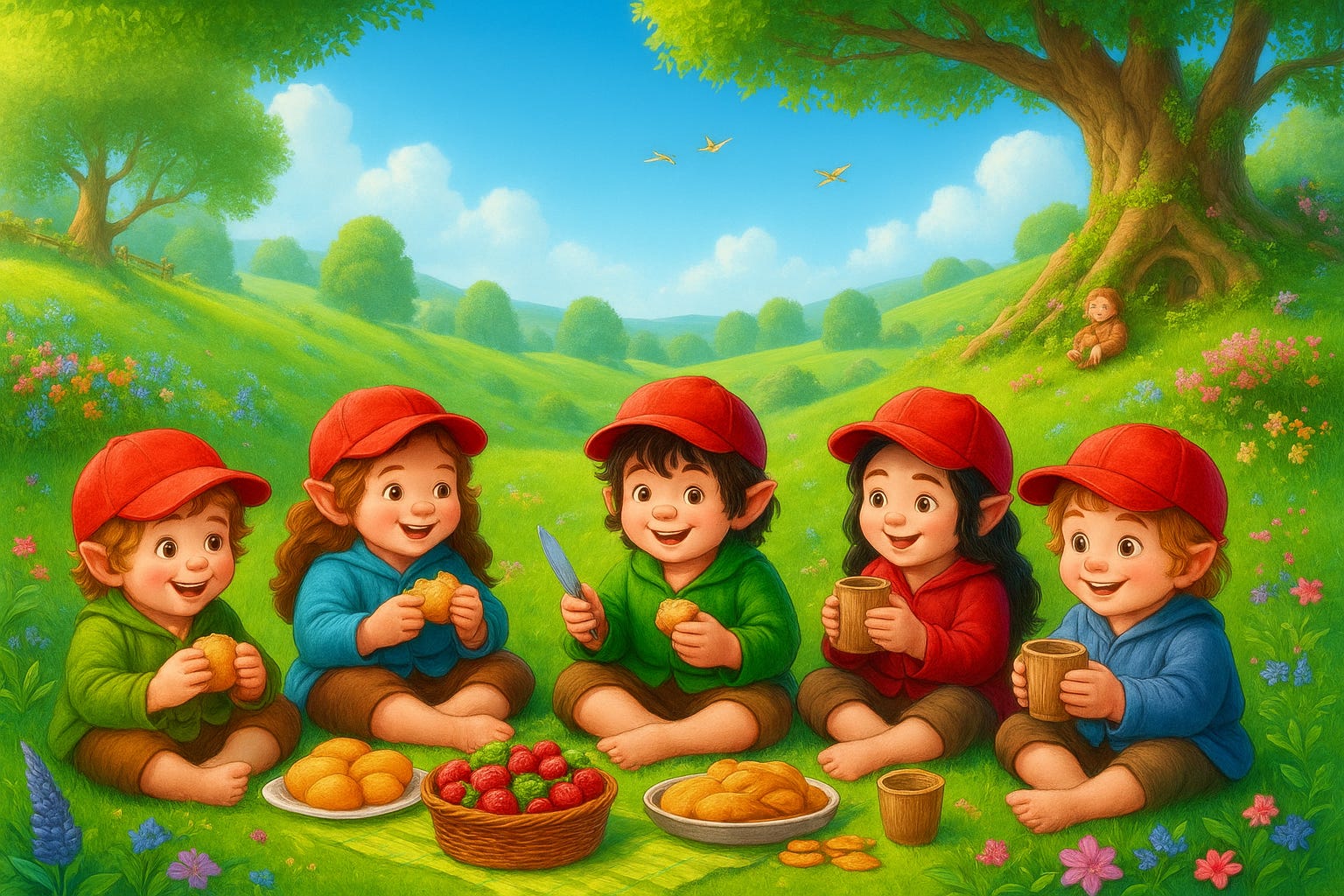
All popular self-improvement books out there target this vision. They talk about how to get rich, how to get a woman, or how to be disciplined. Jordan Peterson keeps screaming at you to make your bed, stand up straight, and tell the truth. If only you did those things, then you would be well on your way to... owning a house, getting a high-paying job, and walking down the aisle! How heroic! Now, I'm not saying that wanting those things is wrong. Society certainly needs stable families and centered adults. However, what boy could ever be inspired to yearn for more if the bar is set so low? What happened to that kid who wanted to be a strong warrior or an intrepid explorer?
Present-day men, above all, seek comfort and pleasure. These last men of our times are subsumed in shallow materialism, inconsequential political activism, or absorbed by the trivial spectacle of sports while being sedated by a steady diet of junk food, drugs, pornography, and video games. There are no clear answers on what course to take. There are no awe-inspiring adventures looming over the horizon. There are no glorious battles left to be fought. With the dwindling belief in Christianity, there has been an ever-increasing existential void, an ever-increasing nihilism. Men in the Middle Ages, at least, unquestionably believed that if they generally told the truth, didn't hurt others, and believed in God, they would be rewarded with eternal bliss in heaven. Without any higher purpose or sanctified beliefs, man becomes self-interested, petty, and small-minded—or so the story goes. Death must be the scariest of all things. It puts an end to all mundane pleasures achievable in a world that, seemingly, has nothing more to offer. Not all men want to die after a long bout with cancer at 80 years of age in a cold, sterile hospital cell. Some madmen who long for more, either to send a political message or by mere accident, have met a monumental death, gone as shooting stars up in the firmament. After all, Achilles’ flame burns brighter than that of most living men. As Nietzsche said:
Many die too late, and some die too early. Yet strange soundeth the precept: “Die at the right time!”
Die at the right time: so teacheth Zarathustra.
—pt. I, §21, Thus Spoke Zarathustra by Friedrich Nietzsche
The Willed Death
My previous short post explored the role of the Ancient Greek concept of agon or "struggle" in bullfighting from the perspective of the fighting bull. The fighting bull has the almost impossible task of outsmarting man and landing a charge at him. I said "impossible" for the bull because of its biology. The bull is colorblind and extremely fierce. The fighting bull is fooled into charging at a red cape that the matador swings above its head over and over. The bull may remind one of Sisyphus lifting that stone atop a hill ad infinitum. Eventually, the bull dies when it charges directly onto a sword plunged deep into its nape, unless its struggle was exceptionally fierce, in which case its life is spared. It was bred, trained, and willed precisely for that moment. The bull goes out as a tragic hero, still fighting up until its last breath, trying to defeat fate itself. That is a beautiful death showcased in all its glory.
Some men have also fought that impossible battle against that decadent entropy of modernity, namely Dominique Venner and Yukio Mishima. Whereas Mishima is well known in the dissident, reactionary sphere, Venner is relatively under-appreciated while being a far more remarkable man than Mishima. Dominique Venner (b. 1935-2013) was a French war veteran, prolific writer, European Nationalist, and dissident thinker. Venner volunteered in the French-Algerian War in 1956. He was eventually incarcerated for 18 months down the line in his life for participating in a failed military coup. While many of the things Venner wrote about are well known to right-wing dissidents nowadays, such as the role of pagan morality in shaping Europe, the ills of multiculturalism, and the necessity of maintaining a proud cultural identity, he was one of the few voices decades ago swimming against the leftist current that threatens to level all that Western civilization has built.
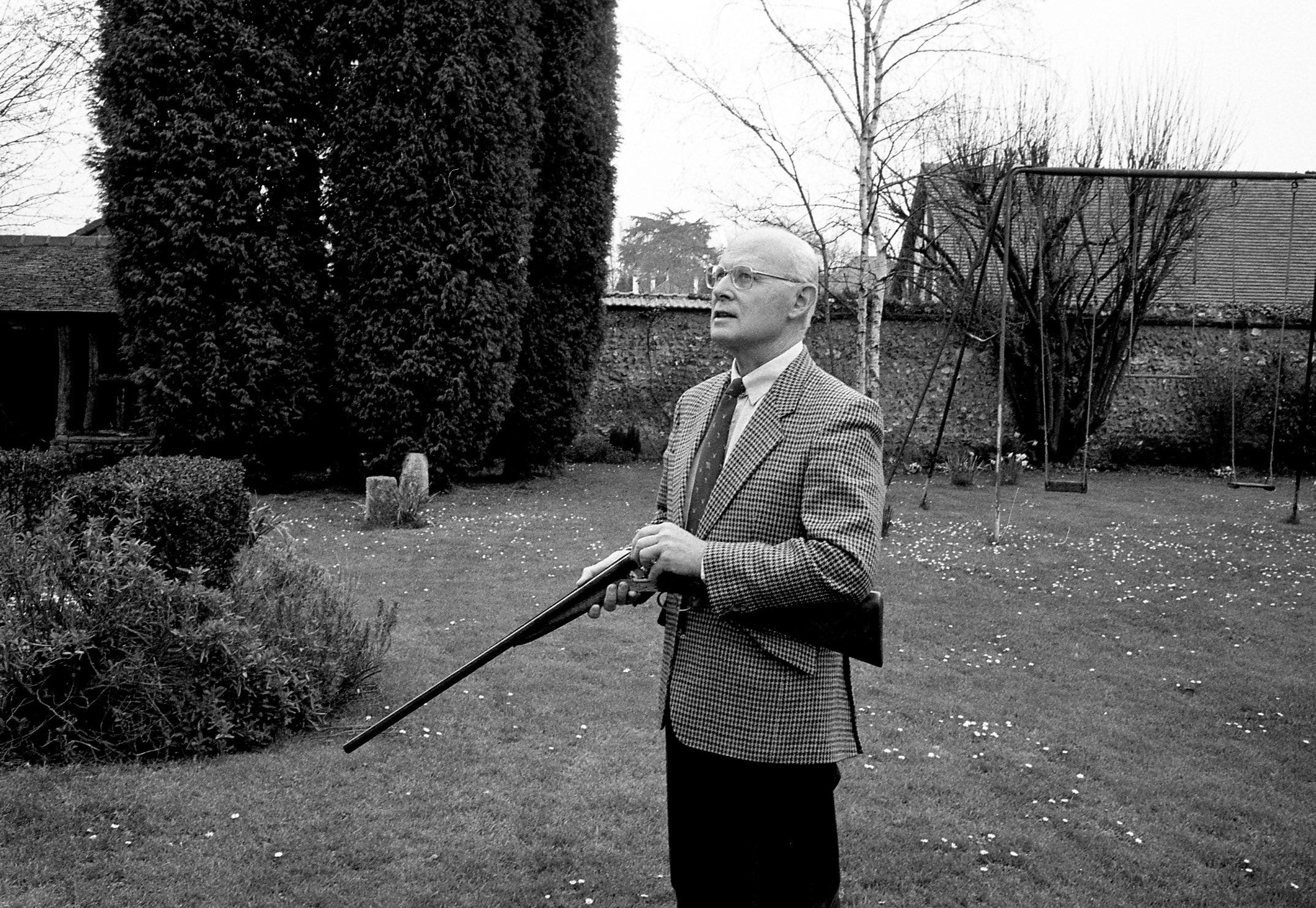
Both Venner and Mishima showed a fascination for Seppuku, a Japanese ritual suicide by disembowelment performed to restore the honor of a samurai who failed in his task. On this topic, Venner wrote,
"Seppuku was not only a way for the bushi to avoid dishonor. It was also an extreme way of showing their genuineness through a heroic and gratuitous act. They had learned to despise those who talked instead of doing. “They thought that a single act says much more than the longest of speeches, because speech may lie.” They believed in the absolute sincerity of the supreme act. They thought that one cannot lie in the face of death."
Later down the line in that same essay, Venner adds,
"At the end of the Second World War, voluntary death in Japan received a peerless consecration when the sacrifice of young kamikazes was demanded. This word means “divine wind,” in memory of the miraculous typhoon which dispersed a fleet of invading Mongols in 1281. A special aerial attack force was established in the hope that suicide-attacks against American ships could ward off the inevitable. The first attack occurred on 25 October 1944. In all, 2198 pilots sacrificed themselves: 24 American ships were sunk, 288 were damaged. Despite this, the enemy’s naval power was not seriously threatened. For his final flight, every kamikaze took a traditional sword with him, held closely against himself. A useless death? Perhaps. But certainly not an absurd one. Only a passive death is meaningless. Willed, it has the meaning one gives it, even when it has no practical utility." 1
It should not come as a surprise, then, that Dominique Venner committed suicide in May 2013 in the cathedral of Notre Dame, with the aid of a handgun, in response to the legalization of same-sex marriage in France. In his suicide note, Venner noted,
"While many men are slaves of their lives, my gesture embodies an ethic of will. I give myself over to death to awaken slumbering consciences. I rebel against fate. I protest against poisons of the soul and the desires of invasive individuals to destroy the anchors of our identity, including the family, the intimate basis of our multi-millennial civilization. While I defend the identity of all peoples in their homes, I also rebel against the crime of the replacement of our people." 2
The French dissident was following the road that Yukio Mishima (b. 1925-1970) had paved approximately 50 years before his own untimely, but purposeful death. Almost everyone in the right-wing, reactionary, dissident sphere is aware of Mishima to some extent. The Japanese writer’s autobiographical essay, Sun and Steel, is a short read that explains his life better than I. To summarize, Mishima came from an aristocratic family with samurai lineage. Samurai retained prestige in post-feudal Japan, even though they no longer served their original function of protecting the emperor. Mishima grew up under his grandmother’s watch in solitude. He was forbidden from going outside to play with other kids, for example. Consequently, the young boy became engulfed by the world of “words”, as he would put it. He read a ton, and he was a prolific writer, as early as his teenage years. His father thought this was slightly gay and would regularly throw his writings into the trash when he found them. He might have had a point—there is a lot of homoeroticism in Mishima’s stories. Shortly after he graduated from university, his father secured him a simple, bureaucratic job in the “Ministry of the Treasure”, something all those aforementioned modern-day hobbits would be drooling for. Less than a year later, he gave up that job to pursue a successful literary career.
Mishima was deeply insecure about feigning an illness to avoid the draft during the Pacific War. He would have certainly died in battle, something he thought was an honorable thing. This resentment over his cowardice was a cross that he would bear throughout his whole adult life. His subsequent life project can be viewed as a way to atone for his self-perceived failings. Mishima traveled to Greece in his early thirties and was astonished by the statues depicting lean athletes in the original Pan-Hellenic Games, where we get the modern-day Olympic Games. Driven to chase that same beauty and discipline, he followed a regimen of “sun and steel”. For the next decade or so, until his death, Mishima religiously adhered to three bodybuilding workouts a week, practiced Kendo (a form of Japanese fencing with wooden sticks), and spent a considerable amount of time in the sun.
In his latter days, Mishima formed the Tatenokai, or “Shield Society”, a private militia with the intent purpose of preserving traditional Japanese values amidst the Westernization of Japan in the post-war era. A couple of years later, Mishima attempted a coup by giving a speech to a disinterested group of soldiers on the top of a balcony in the eastern headquarters of the Japanese Special-Defense Forces. Upon this predictable failure, he committed Seppuku, something he deliberately and meticulously planned for with some members of the Tatenokai.
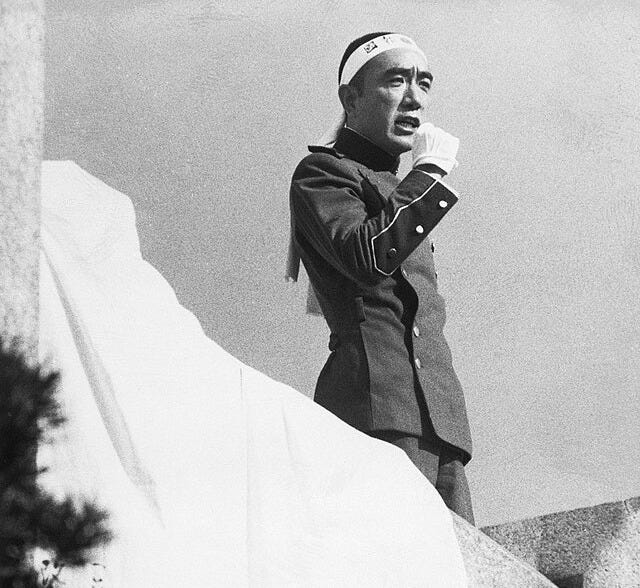
A few years before his death, Mishima had clearly insinuated that he aimed for a dramatic death. In Sun and Steel, he contemplates,
“Why should a man be associated with beauty only through a heroic, violent death? In ordinary life, society maintains a careful surveillance to ensure that men shall have no part in beauty; physical beauty in the male, when considered as an “object” in itself without any intermediate agent, is despised, and the profession of the male actor—which involves constantly being “seen”—is far from being accorded true respect. A strict rule is imposed where men are concerned. It is this: a man must under normal circumstances never permit his own objectivization; he can only be objectified through the supreme action—which is, I suppose, the moment of death, the moment when, even without being seen, the fiction of being seen and the beauty of the object are permitted. Of such is the beauty of the suicide squad, which is recognized as beauty not only in the spiritual sense but, by men in general, in an ultra-erotic sense also. Moreover, serving as agent in this case is a heroic action of an intensity beyond the resources of the ordinary mortal, so that “objectivization” without an agent is not possible here. However close mere words may get to this moment of supreme action that acts as intermediary for beauty, they can no more overtake it than a flying body can attain the speed of light.”
A violent and willed death definitely qualifies as potent—one must only see Jesus on the cross to attest to it. There are other deaths, however, which could be qualified as unwilled and even clumsy. Yet, they are similarly impactful.
The Timely, Perfect Death: The Sailor Who Fell from Grace with the Sea and Zyzz
The Sailor Who Fell from Grace with the Sea is a novel by Yukio Mishima, written in 1963, a few years after he began his "sun and steel" protocol. The novel follows Noboru Kuroda, a thirteen-year-old boy; Fusako, his widowed mother; and a sailor named Ryuji Tsukasaki, who enters into a relationship with Fusako. Noboru is initially captivated by the sailor, viewing him as a symbol of masculinity and glory. However, when the sailor decides to abandon his life aboard a cargo ship traveling the world to marry Fusako and settle down with the Kuroda family, Noboru is horrified. In the boy’s mind, the proper course of action would have been for the man to leave the woman while she wept. To make matters worse, Ryuji becomes his stepfather and begins preparing for a position in the family business. The boy and his gang of eccentric friends sentence him to death as a means of correcting this perceived cosmic transgression.
The gang convinces Ryuji to dress as a sailor, and they lure him to a dry dock, an isolated location, to recount tales of his sailing experiences. There, they plan to sedate him with spiked tea and murder him. As the man narrates his stories, he comes to regret his decision to abandon his life at sea. Ryuji reflects, "I could have been a man sailing away forever." He muses that "glory and death and woman were consubstantial. Yet when the woman had been attained, the other two withdrew beyond the offing and ceased their mournful wailing of his name. The things he had rejected were now rejecting him." The novel concludes with the man drinking the poisoned tea, with the narrator stating, “Glory, as anyone knows, is bitter stuff.”
Here, we see Mishima’s concept of a beautiful death. Instead of Ryuji becoming domesticated, his life ends while he is still at his zenith, a mysterious sailor. Death can immortalize an individual, preventing the erosion of their image over time. Zyzz (b 1989-2011), the Australian bodybuilder, is another such figure, having arguably single-handedly created what was then known as the “aesthetic movement.” Zyzz was an idol to a generation of young men who felt weak and yearned for something more. In his early years, he epitomized the last man: dangerously skinny, addicted to World of Warcraft, and lacking any higher purpose. Zyzz began using steroids and became a shooting star, shining splendidly for a few years before his death in a brothel in Thailand—a death that, although vulgar, was nonetheless fitting. As Nietzsche muses,
One must discontinue being feasted upon when one tasteth best: that is known by those who want to be long loved.
—pt. I, §21, Thus Spoke Zarathustra by Friedrich Nietzsche

Zyzz is still remembered today. Many bodybuilding poses and online slang terms can be traced back to him. He was very charismatic, often dancing and performing outlandish antics for the amusement of 4channers. At times, I wonder: what if Zyzz were still alive? Such a scenario would be a universal aberration. Zyzz had to die young for his legacy to be cemented. Had he lived to be almost forty, he would, unequivocally, be considered cringe and gay. It is important to remember that Zyzz was a decadent, as was Mishima. I am not suggesting that anyone emulate them by participating in a coup or using steroids; that would be terrible advice. Or, on second thought, such a course of action would be preferable to utter stagnation. Ultimately, they became memorable. The flames of these men burn brighter than most breathing flesh.
The Accidental Great Death
In Bronze Age Mindset, Nietzschean vitalist and male bodybuilding enjoyer, BAP, writes,
“When Theodore Roosevelt was I think close to seventy years old, he went on expedition to the Amazon, then mostly still unexplored: he called it one last chance to be a boy. This expedition led to his death; and it was a good death. He followed in footsteps of men of power like Lope de Aguirre…and never lost the yearning in his heart for Eldorado.”
Those who die climbing up Mount Everest or running an ultramarathon in the desert suffer deaths that the majority of the population would categorize as silly. There was no need for Roosevelt to go to the most dense tropical jungle in the world at such an old age. There is no need for rich people to go scuba diving in the depths of the sea. Those who take such great risks want to live the richest lives they can.
Nietzsche writes about an acrobat walking along a tightrope that falls on Zarathustra’s Prologue in Thus Spoke Zarathustra. This man represents the ideal of a man who takes risks—who chases the sublime for its sake alone; one who is a vehicle for the Übersmench; one who leaves the ground fertile for his arrival, even if he must sacrifice himself.
Section 4:
Zarathustra, however, looked at the people and wondered. Then he spake thus:
Man is a rope stretched between the animal and the Superman—a rope over an abyss.
A dangerous crossing, a dangerous wayfaring, a dangerous looking-back, a dangerous trembling and halting.
What is great in man is that he is a bridge and not a goal: what is lovable in man is that he is an OVER-GOING and a DOWN-GOING.
Section 6:
The market-place and the people were like the sea when the storm cometh on: they all flew apart and in disorder, especially where the body was about to fall.
Zarathustra, however, remained standing, and just beside him fell the body, badly injured and disfigured, but not yet dead. After a while consciousness returned to the shattered man, and he saw Zarathustra kneeling beside him. “What art thou doing there?” said he at last, “I knew long ago that the devil would trip me up. Now he draggeth me to hell: wilt thou prevent him?”
“On mine honour, my friend,” answered Zarathustra, “there is nothing of all that whereof thou speakest: there is no devil and no hell. Thy soul will be dead even sooner than thy body: fear, therefore, nothing any more!”
The man looked up distrustfully. “If thou speakest the truth,” said he, “I lose nothing when I lose my life. I am not much more than an animal which hath been taught to dance by blows and scanty fare.”
“Not at all,” said Zarathustra, “thou hast made danger thy calling; therein there is nothing contemptible. Now thou perishest by thy calling: therefore will I bury thee with mine own hands.”
When Zarathustra had said this the dying one did not reply further; but he moved his hand as if he sought the hand of Zarathustra in gratitude.
Only when we are close to death can we simultaneously feel the most alive. If you have a family to take care of, then by all means, keep living a domesticated life. On the other hand, if you are a young man with little to lose, what’s stopping you from taking a risk to establish a legacy, even if it is all forgotten in the sands of time?
https://counter-currents.com/2019/01/zen-the-samurai-ethos-death/
https://counter-currents.com/2013/05/the-reasons-for-a-voluntary-death/
You may be interested in Jon Nödtveidt and his suicide.
Great article. I think another important link in this philosophical tradition on the right is Aufheben (featured in Hegel and influenced nazism), or to create through destruction. In the sea of fertility tetrology Mishima explains how a man can gain identity by heroic death and prove himself. At one point during Runaway Horses, the parable of a mouse that believes itself to be a cat kills itself in order to not be eaten by a cat is used to analogize this mentality. Essentially in order to prove yourself a man and a hero you must die to the world and be willing to die a dramatic death.